Diving Fun Fact

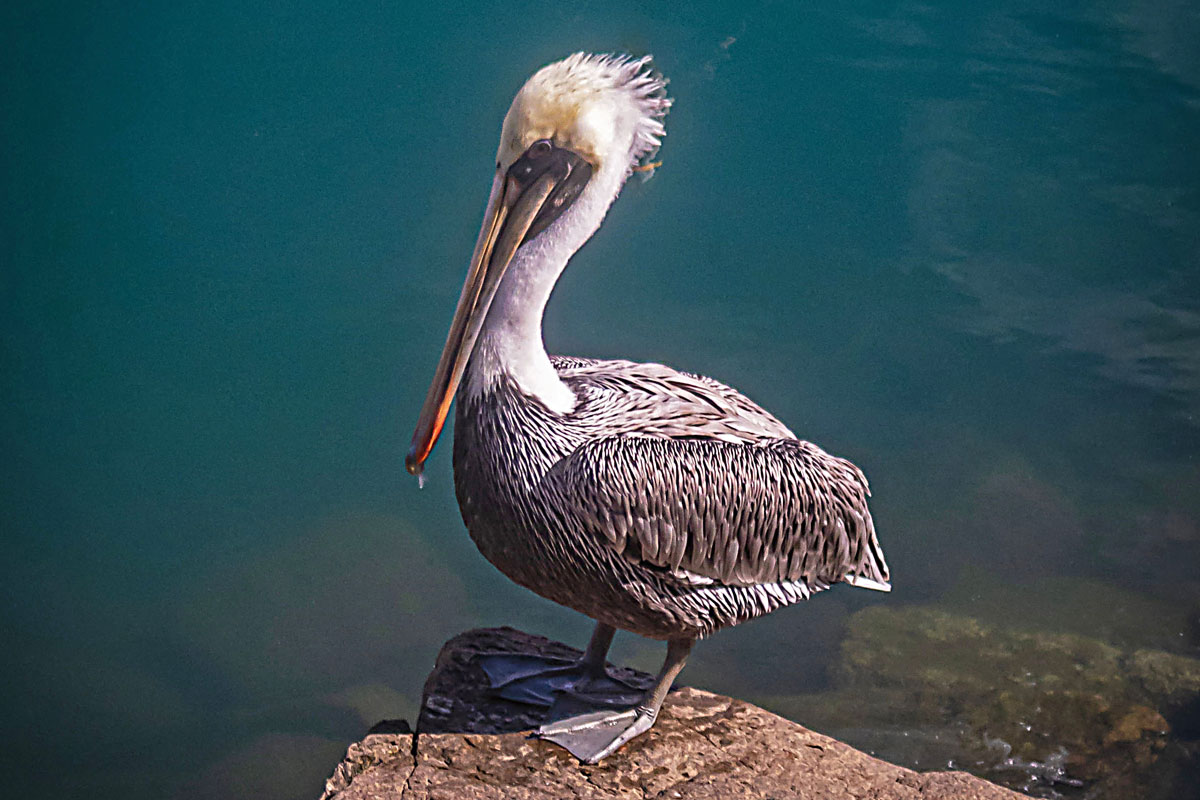
The Pelican. Cabo San Lucas, Mexico

The Pelican is easily recognizable by its pronounced beak and gular pouch that connects the lower jaw to the neck.When the bird gathers its prey, seawater is drained into the pouch so the catch can be swallowed. Pelicans prey on fish, crustaceans, amphibians, and turtles.

Their fossil record shows a lineage of at least 30 million years, which is believed to have originated in Europe.The oldest known pelican fossil found in Luberon, France, revealed that the pelicans beak and gular pouch have been part of the animals make-up for all of its traceable existence.

We photographed this pelican during a day of diving in Cabo San Lucas, Mexico. Read more in our post, Scuba Diving Cabo San Lucas, Mexico.

More Diving Fun Facts

Nembrotha Lineolata Nudibranch, Zamboanguita, Philippines
Zebra Urchin Crab, Anilao, Philippines
Ornate Ghost Pipefish, Anilao, Philippines
Frogfish, Anilao, Philippines
Paddle-flap Scorpionfish (Rhinopias eschmeyeri), Anilao, Philippines
The Coleman Shrimp and the Rainbow Urchin, Anilao Philippines
Flamboyant Cuttlefish, Anilao, Philippines
Salp Anilao Philippines
Juvenile Harlequin Sweetlips, Apo Island, Philipinnes
Blue-ringed Octopus, Lembeh, Indonesia
Devil Scorpionfish, Lembeh, Indonesia
Mimic Octopus Lembeh Indonesia
Octopus, Lembeh, Indonesia
Stonefish, Lembeh, Indonesia
Green Turtle, Komodo National Park, Indonesia
Coconut Octopus, Lembeh, Indonesia
Bobtail Squid, Lembeh, Indonesia
Bobbit Worm, Lembeh, Indonesia
Striped Eeltail Catfish, Lembeh, Indonesia
Hairy Frogfish, Lembeh, Indonesia
Crocodile Fish, Komodo National Park, Indonesia
Reef White Tip Shark, Komodo, Indonesia
Orbicular Batfish, Komodo National Park, Indonesia
Barracuda Tornado, Sipadan, Malaysia

© 2018 MyMola |  Privacy Policy